The Race-Card Shortcut That Leaves Out the Conditions
Read a race-card title alongside its conditions to understand which horses may enter, how weights are assigned and what the event’s shorthand leaves unsaid.

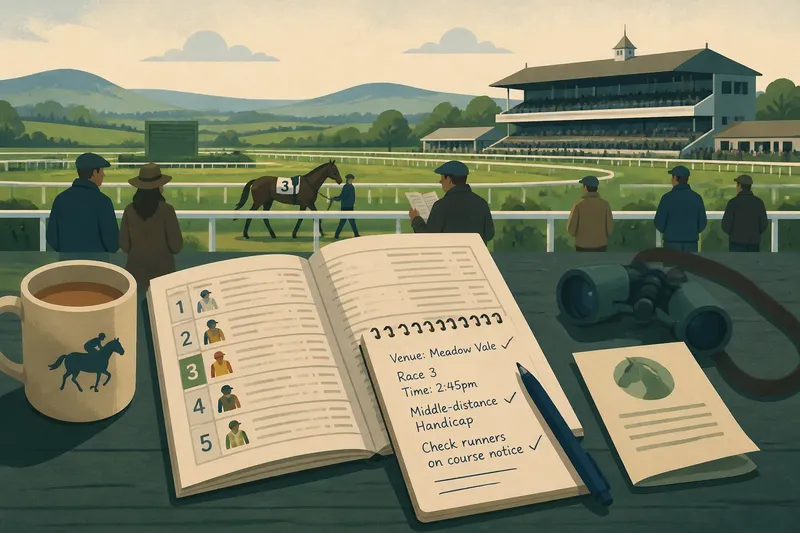
At breakfast, you scan a race card and see “Maiden Stakes” beside a runner’s name. The race-card title gives you a quick clue, but the full conditions determine what that clue means for this particular event.
Title and terms
A race title is the short name printed prominently on the card. It may identify a broad race category, a sponsor, a venue or a series. The conditions set out the rules for entry and any allowances or penalties.
Those parts can overlap, but they do different jobs. “Maiden” is commonly used for a race restricted by a horse’s record of wins, but the exact qualifying record depends on the stated terms and the relevant racing rules. Do not infer the full eligibility test from the word alone.
On a printed card, look below the race name for the conditions. On a website or app, open the race-details panel or full description instead of relying on the compact list view.
Eligibility in the wording
Conditions may set limits by age, sex, previous wins, rating or a combination of these. They can also specify a race category or a defined status. Two races carrying the same broad label may therefore admit different horses.
Age terms can be easy to skim past. A race might be confined to a stated age group, or allow older runners while giving younger ones an allowance. Read the eligibility sentence before deciding whether a horse fits.
“Novice” and “maiden” are not universal shorthand. Their application can depend on the race type, qualifying wins and the rules of the jurisdiction. If the wording is unclear, consult the full race description or the relevant racing authority’s glossary rather than relying on everyday usage.
Weights and allowances
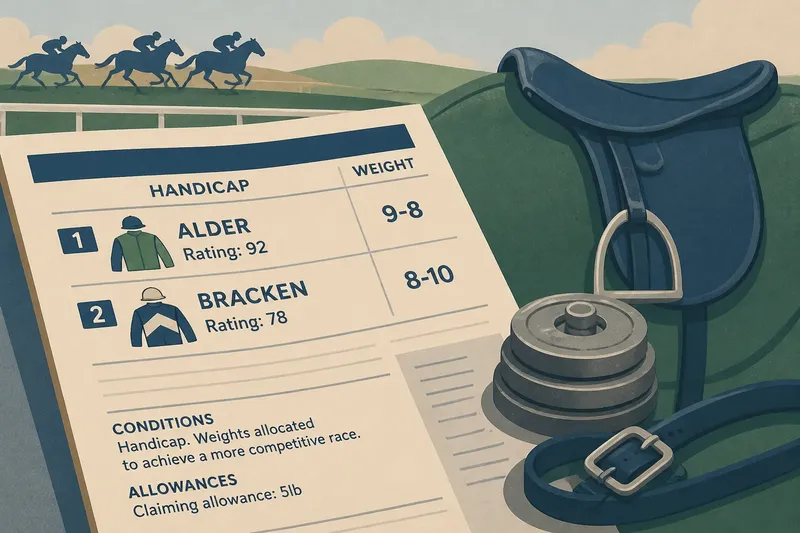
The conditions can explain why runners carry different weights. A handicap uses ratings to allocate weights, while other races may set a common weight or provide allowances based on age, sex or previous achievements. The title alone may not show which arrangement applies.
Look for both penalties and allowances. A penalty can add weight after a qualifying win; an allowance reduces weight when the stated terms apply. The conditions explain how these provisions affect the field.
Say you see an invented card for a novice race. Its full terms state that a qualifying recent winner incurs a penalty, while a younger runner receives a separate age allowance. If the listed weights differ, those clauses offer the explanation; the broad title by itself does not.
How should you read a title?
A title can identify the event without describing every entry rule. Treat it as a signpost, then use the full conditions to check the details that matter.
Does a sponsor’s name set eligibility?
Usually, a sponsor’s name identifies the event commercially rather than setting entry rules. Check the conditions for restrictions, even if the title also includes familiar racing language.
Does “stakes” define the full race terms?
No. The word alone does not establish the contest’s complete terms or status. Use the formal race description to see which rules apply.
Where can you find the full conditions?
Check the detailed race listing on the official meeting card or the relevant racing authority’s information. A shortened preview may omit wording needed to understand eligibility or weights.
What if the wording seems inconsistent?
Compare the full description with the official programme or the relevant authority’s information. If the discrepancy remains, seek clarification from an appropriate official rather than assuming the title takes precedence.
What conditions can tell you
Conditions explain who may enter and how weights are assigned; they do not predict which horse will perform best. Form, fitness, tactics and suitability require separate consideration.
When comparing a runner’s record across races, note the restrictions and weight rules in each one. A result in one type of contest may not tell you how the horse fits a differently restricted event.
For a sound reading of a race-card title, keep the full conditions nearby and check the relevant eligibility and weight clauses. The title identifies the event; the terms show what entrants must meet.