How a Race Meeting Fits Together
Learn how a race meeting is organised, distinguish the programme from each contest and use the card to find the details that belong to a particular race.
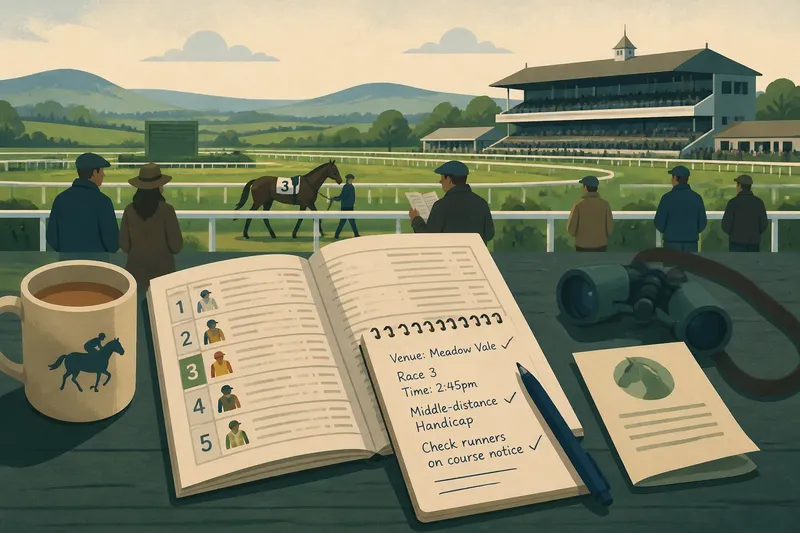
At the kitchen table, a race card can sit beside a mug and still seem to offer too many names at once. The shape of a race meeting becomes clearer when you read it as a programme of distinct contests, not as one long list of horses.
The programme’s structure
A meeting is the day’s programme at a venue. It contains a sequence of races, each with its own conditions, distance and declared runners. The meeting gives those contests a shared setting; it does not make their details interchangeable.
Think of the card as a timetable with several layers. The meeting identifies the occasion, the race heading identifies a particular contest, and each runner’s entry supplies information about one horse taking part.
Find the right race
A race number or position and its scheduled time are useful ways to locate a contest. Its title can provide another clue, but titles may be shortened in different listings. Check more than one detail before moving on to the runners.
This matters when the same card is shown in different formats. A venue page may display the full programme, while a race-specific page shows only one contest. Confirm that the number or time matches before treating the conditions and names as belonging together.
Say you have an invented card from a fictional venue and want to follow its third race. You check the third listing, match its scheduled time against the organiser’s race page, then read the conditions beneath that heading; the result is a set of runner details tied to the intended contest, rather than names lifted from a neighbouring race.
Read the race heading
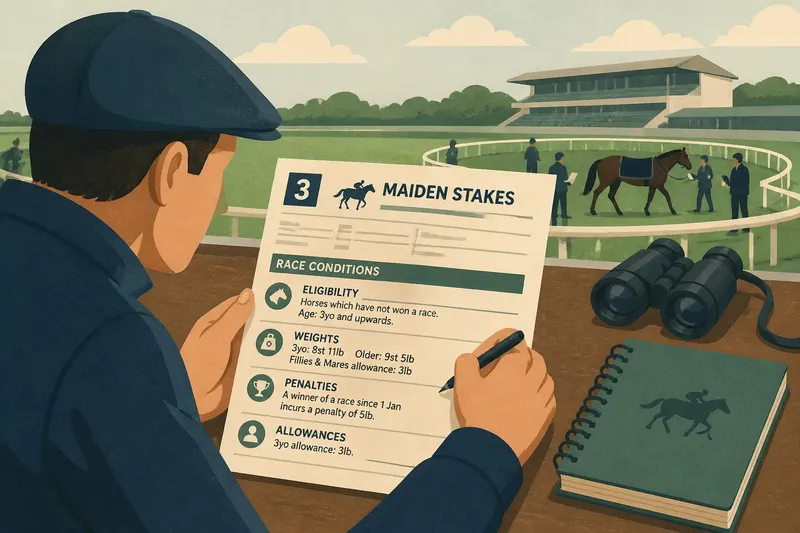
Once you have found the listing, look beyond its title. Distance and race type describe the broad form of the contest, while the conditions explain which runners may take part and on what terms. A sponsor’s name can help you recognise a race, but it does not replace those defining details.
Use the heading as an anchor when scanning columns. A horse’s number, for example, identifies a runner within a race; it is not the number of the race itself. Keep each name and its accompanying details beneath the correct heading.
Check the card’s details
These checks help you decide whether a listing contains the information you need:
- Race number or position: If it matches the contest you are following, continue; if not, return to the correct listing before reading its runners.
- Scheduled time: If it agrees with the other race details, use it as a cross-check; if it differs, check the organiser’s current programme.
- Race title: If it matches, treat it as a useful identifier; if the title is abbreviated or unfamiliar, rely on the number, time and conditions as well.
- Distance and type: If they fit the contest you intended to follow, continue; if they do not, pause and confirm that you have not opened a neighbouring race.
- Conditions: If they describe the eligibility and format you expected, read the runner entries; if they differ, use the conditions shown for this race rather than carrying over assumptions from another.
- Declared runners: If the names appear under the intended race heading, use them as that contest’s entries; if a name is missing or a notice changes the list, check the latest official update.
A mismatch need not mean the card is wrong: it may simply be a different version or a shortened display. The useful decision is to pause and verify the race identity before comparing any runner details.
Follow updates carefully
A printed or downloaded card captures the programme as it was presented when issued. Runner lists, scheduled information and course details may later be updated, so keep checking the notice for the same race rather than relying on an older copy.
For example, imagine an invented situation in which a reader saves a card at home and later sees a course notice about a withdrawal. They match the notice’s race time and number to the saved card, then amend their note beside that contest; the observable result is a current runner list without confusing the change with another race.
Use information from the course or organiser for changes during the day. A glossary can help with unfamiliar terms, but the conditions printed for the particular contest remain the place to check how those terms apply.
Questions about race meetings?
What is the difference between a meeting and a race?
A meeting is the programme at a venue on a particular day. A race is one contest within that programme, with its own heading, conditions and runners.
How do I find a particular race on a card?
Match its number or position and scheduled time, then cross-check the title. Do not use a horse’s name alone, since runner details make sense only under the correct race heading.
Why can conditions differ across one meeting?
Each race has its own format and eligible group, so the conditions can vary across the programme. Read the terms attached to the contest you are following rather than assuming a neighbouring race shares them.
Can a race card change after publication?
Yes, later notices may update details such as the declared runners or scheduled information. Check the current notice from the course or organiser when a change affects the race you are following.
Keep a clear note
If you want to return to a race without scanning the whole programme again, note the venue, race number or position, scheduled time and one feature that identifies the contest. Add a runner’s name only after confirming it appears under that heading.
Imagine an invented note for a fictional venue: “Third race; scheduled time checked against the organiser’s page; conditions identify a middle-distance contest; verify runner list before following.” Each entry records a source or detail to check, so the note remains useful even if a later update changes the card.
Understanding the shape of a race meeting is less about memorising a page than keeping its levels distinct. Use the meeting to locate the day’s programme, the race heading to identify one contest, and the latest official notice when its details change.